Planning a wedding in Tuscany is not as straightforward as it looks on a mood board. There are venues to compare, vendors to vet, legal paperwork to navigate, and a guest list that suddenly includes people who have never been to Italy. The Tuscan Wedding Guide exists to make that process clearer.
This is a collection of practical resource, built for couples who are seriously considering Tuscany as their wedding destination and want honest, informed answers to the questions that actually matter. How far in advance should you book? What does a realistic budget look like? Which season makes the most sense for your kind of celebration? What do local vendors expect, and how does that differ from what you might be used to at home?
Tuscany has been hosting destination weddings for decades, which means there is a well-established infrastructure here. We have experienced planners, photographers who know the light at every hour of the day, caterers who have fed two hundred guests in a courtyard without a commercial kitchen. But that same familiarity can work against couples who arrive with assumptions. Not every venue can accommodate a DJ until 3am. Not every caterer will substitute the menu without a conversation. And not every date you have in mind will be available, especially if you are thinking about September.
At Tuscan Dream, we have decades of experience. We work with villas and wedding venues across the region. We have seen what works and what tends to cause last-minute stress. The articles in this section draw on that experience directly.
You will find guides covering the full arc of the planning process, from the earliest decisions about location and timing, through to the details that come together in the final weeks. Some posts focus on logistics: how to hire the right wedding planner, what questions to ask a Tuscan photographer, how to structure a budget that accounts for the costs couples most commonly underestimate. Others go deeper into the specifics of the region, the differences between a vineyard wedding in Chianti and a villa ceremony in the Val d’Orcia, how Tuscan wedding traditions differ from what couples expect, and what time of year genuinely offers the best balance of weather, availability, and value.
A few things are worth saying upfront. Tuscany is not a budget destination. A well-planned wedding here, with a reasonable guest count and quality vendors, represents a significant investment. What you get in return is a setting that requires very little decoration, food and wine that guests will talk about for years, and a pace of celebration that feels different from weddings held closer to home. Whether that trade-off makes sense depends entirely on your priorities, and part of what this guide aims to do is help you figure that out before you commit.
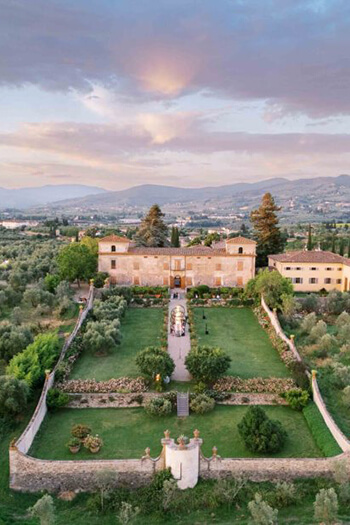
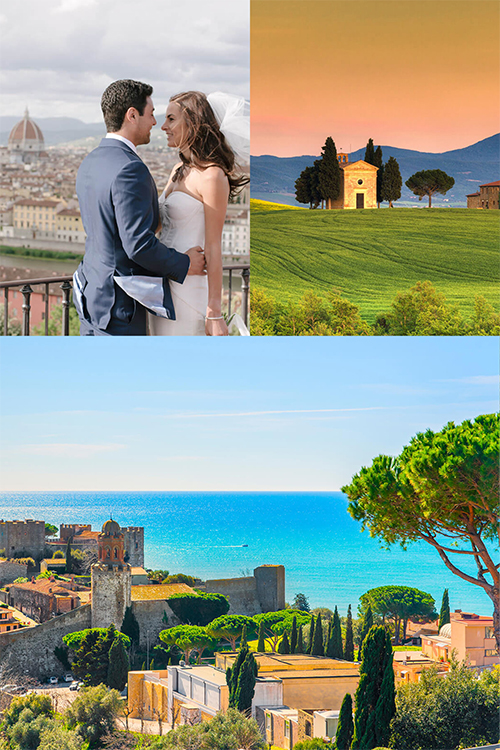
The region itself is more varied than most couples realize when they first start researching. Tuscany covers a large area, and the experience of getting married in a hilltop village in the Crete Senesi is quite different from a ceremony on a working estate near Lucca or a formal villa on the outskirts of Florence. Each area has its own character, its own vendor network, and its own logistical considerations for guests travelling from abroad.
The Tuscan Wedding Guide covers all of it! Browse by topic, start with the questions you already have, or read through from the beginning if you are early in the process. Either way, the goal is the same: to give you a clearer picture of what planning a wedding in Tuscany actually involves, so you can make decisions with confidence.